
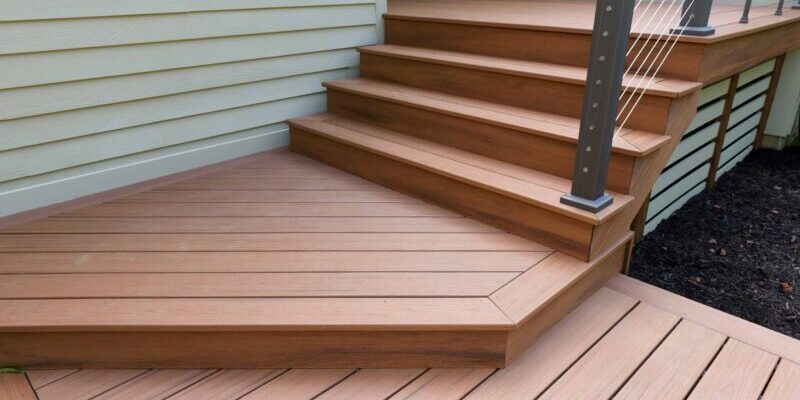
Building deck stairs is one of the most important steps in completing your outdoor structure. Properly built stairs ensure both safety and visual appeal, providing seamless access from your deck to your yard. With accurate measurements, quality materials, and careful installation, you can create stairs that are sturdy, code-compliant, and built to last.
What You’ll Need Before Building Deck Stairs
Before starting your project, preparation is key. Begin by checking local building codes to ensure your stair design meets height, width, and railing requirements. Gather the following materials and tools:
- Pressure-treated lumber or composite boards
- Stringers (typically 2x12s)
- Stair treads and risers
- Galvanized nails or deck screws
- Level, tape measure, framing square, and circular saw
- Concrete mix or deck blocks (for stair landing support)
Having all materials ready before you begin saves time and helps maintain consistency in your build.
How to Measure and Plan Your Deck Stairs Correctly
Accurate measurements determine the safety and comfort of your stairs. Start by measuring the total rise—the vertical distance from the ground to the top of the deck surface. Divide this number by the ideal riser height, usually around 7 inches, to find the number of steps you’ll need.
Next, calculate the run or tread depth, typically 10 to 11 inches. Use a framing square to mark each step’s rise and run on your stringers, ensuring every cut aligns perfectly. Plan for a landing or pad at the base of the stairs using compacted gravel or concrete to support the structure and prevent shifting over time.
Step-by-Step Instructions to Build Deck Stairs Safely
- Mark and Cut the Stringers: Using your measurements, outline and cut your stair stringers carefully. Double-check your cuts to ensure uniformity, as uneven stringers can create unsafe stairs.
- Attach the Stringers: Secure the stringers to the deck’s rim joist using galvanized metal hangers or lag bolts. Make sure they sit flush and level.
- Install the Landing: Prepare the base by leveling the ground and setting deck blocks or a small concrete pad. This adds stability and prevents sinking.
- Add Treads and Risers: Once the stringers are set, fasten the treads using decking screws. Ensure each tread overhangs the riser by about one inch for safety and comfort.
- Install Railings and Finishing Touches: Depending on the height of your deck, building codes may require railings. Use sturdy posts and balusters spaced evenly for safety. Sand rough edges and apply sealant or stain for weather protection.
By following these steps, you’ll have a staircase that complements your deck and stands up to the elements.
Common Mistakes to Avoid When Building Deck Stairs
Many DIY builders overlook key safety details that can compromise the stability of deck stairs. Here are common mistakes to avoid:
- Inaccurate measurements: Even a half-inch error can throw off the stair’s angle and comfort.
- Skipping code requirements: Local codes exist to ensure safe tread and riser dimensions.
- Weak stringer attachment: Failing to secure stringers properly can lead to structural failure.
- Poor drainage planning: Without proper drainage or sealing, wood can warp or rot over time.
- Inconsistent spacing: Uneven steps create tripping hazards and aesthetic imbalance.
Taking time to plan, measure, and verify your work prevents these costly and dangerous errors.
Get Professional Deck Building Help from GAW Builders
While building deck stairs can be rewarding, even minor miscalculations can affect the structure’s safety and longevity. For homeowners who want precision, durability, and code compliance, hiring professional builders ensures the job is done right the first time.
Experienced deck builders handle every detail—from design and material selection to secure installation—ensuring your stairs meet the highest safety standards. Whether you’re planning a small entryway or a multi-level deck, professional support guarantees peace of mind and long-lasting quality.